

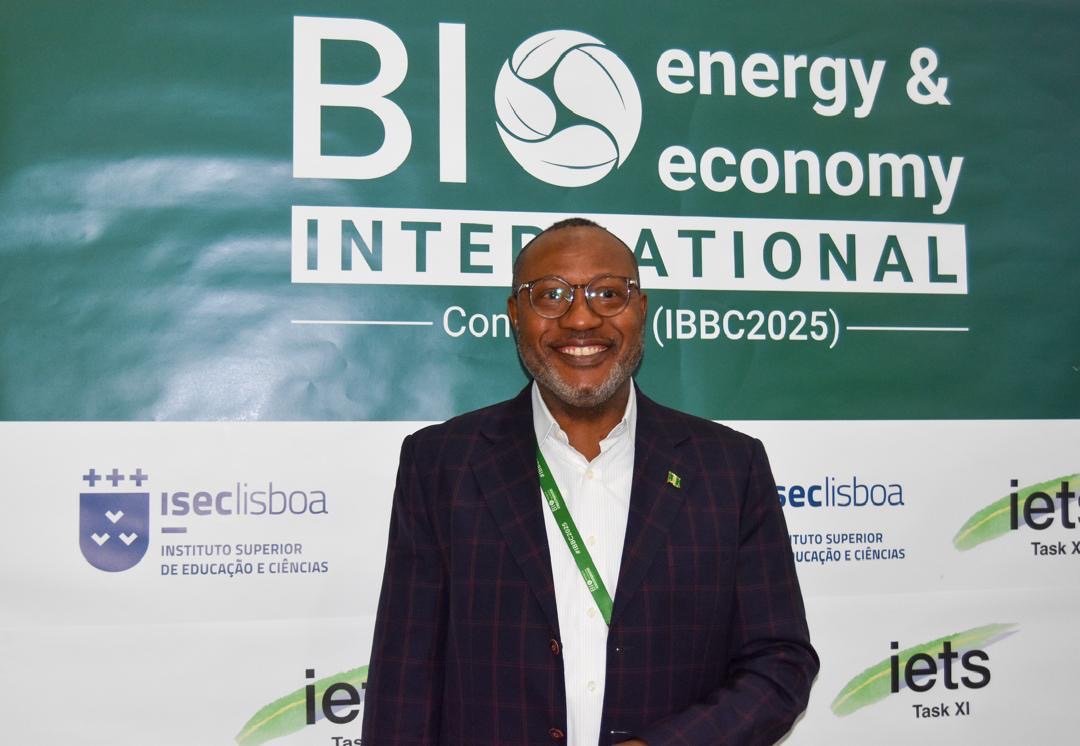

The Former Minister of Environment, Mohammed H. Abdullahi, CON and Senior Partner at PEN Network Organization has called for the adoption of an integrated bioenergy and bioeconomy strategy as a transformative pathway to addressing energy poverty, climate vulnerability, and economic challenges in Sub-Saharan Africa (SSA).
Speaking at a recent policy lecture at the IBBC2025 conference in Portugal , Abdullahi noted that despite the region’s vast land and biomass resources, Sub-Saharan Africa continues to grapple with low electrification rates, heavy dependence on traditional biomass for cooking, and limited industrial development. He emphasized that these challenges, if left unaddressed, would continue to undermine economic growth and social development across the region.
According to Abdullahi, more than 570 million people in Sub-Saharan Africa lack access to electricity, while nearly 900 million rely on firewood and charcoal for cooking practices that have severe implications for public health, environmental sustainability, and gender equity. He stressed that modern bioenergy solutions, when properly deployed, could significantly reverse these trends.
Abdullahi explained that modern bioenergy systems including biofuels, biogas, biomass power, and processed solid biomass should serve as the foundation for a broader bioeconomy. Such a bioeconomy, he said, would enable the production of bio-based products, materials, fertilizers, and industrial inputs, while embedding circular economy principles that turn waste into valuable resources.
Abdullahi further argued that Sub-Saharan Africa must develop a homegrown, context-specific bioeconomy model rather than replicate approaches from developed economies. He identified key opportunities such as rural electrification through decentralized bioenergy systems, job creation across agricultural and processing value chains, improved waste management, enhanced soil fertility through bio-fertilizers, and climate change mitigation through reduced greenhouse gas emissions.
Highlighting Nigeria’s potential, he cited studies estimating that the country generates over 100 million tonnes of agricultural residues annually, much of which remains underutilized. He also pointed to urban organic waste, agro-industrial by-products, forestry residues, and non-edible energy crops grown on marginal lands as critical feedstocks for scaling sustainable bioenergy solutions across the continent.

However, Abdullahi cautioned against unregulated expansion of bioenergy projects, warning that issues such as food-versus-fuel competition, insecure land tenure, weak governance frameworks, limited technological capacity, and financing constraints could undermine progress. He stressed the importance of placing sustainability, inclusivity, and community participation at the center of bioeconomy development.
To address these challenges, the former Minister called for coordinated action involving governments, development partners, investors, and research institutions. He advocated for the development of integrated national bioeconomy strategies, increased investment in research and innovation, deployment of blended finance mechanisms, and capacity building for local communities and professionals.
In conclusion, Abdullahi stated that the future of bioenergy in Sub-Saharan Africa goes beyond power generation, emphasizing that it represents an opportunity to build a resilient, inclusive, and circular economic system capable of delivering energy access, employment, and environmental sustainability. He urged stakeholders to seize the moment and position bioenergy as a cornerstone of Africa’s sustainable development transition